Feeders for pigs "Mriia"
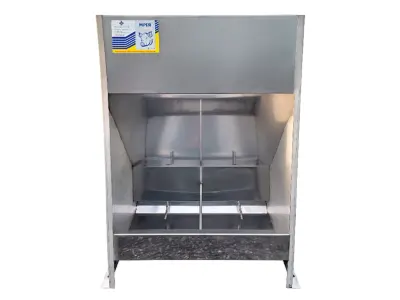
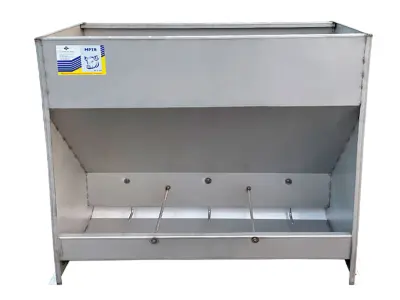
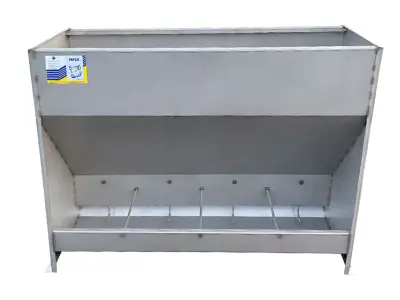
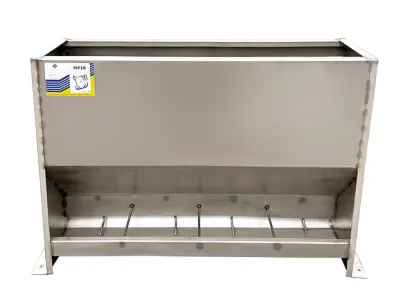
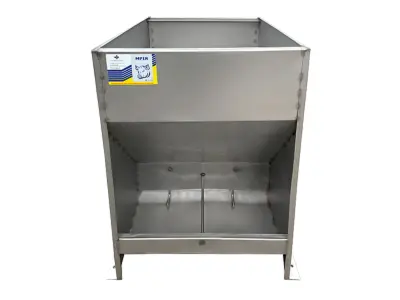
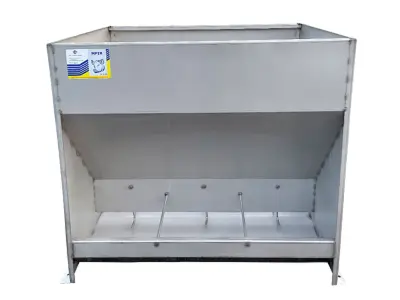
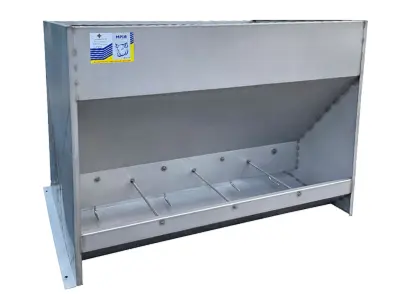
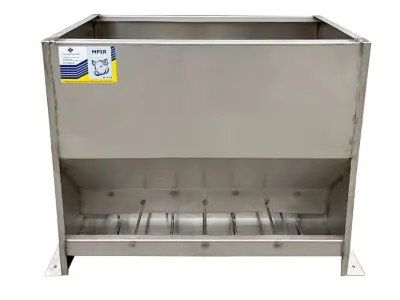
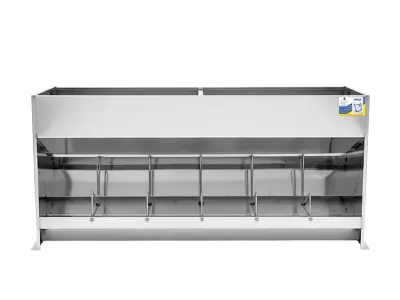
Automating feed distribution is a critical prerequisite for profitable commercial swine farming, as feed costs represent up to 70% of total pork production expenses. Traditional open troughs cause extensive feed waste: pigs root feed out onto the pen floor, contaminate it with manure, leading to feed acidification, mold growth, and enteric disease outbreaks. The "Mriya" pig feeder series (automatic hopper pig feeders) eliminates these issues by providing hygienic, portion-controlled dry feed dispensing in an ad libitum feeding regime. Engineered geometry, precise flow-metering gates, and wear-resistant materials minimize feed spillage, sustain high average daily weight gains, and reduce daily barn labor requirements.
Design Features and Construction Materials of "Mriya" Pig Feeders
The hopper feeder structure is specifically designed around porcine anatomy and natural behavioral rooting patterns, withstanding high mechanical impact inside intensive pig housing:
- Food-grade stainless steel: the feed pan, agitation bars, and components in direct contact with feed and saliva are manufactured from heavy-gauge stainless steel. The material resists corrosive barn ammonia vapors, prevents oxidation, and easily withstands daily high-pressure thermal washdowns with chemical disinfectants;
- High-capacity bulk hopper: the tapered geometry of the hopper guarantees continuous gravity flow of dry meal or pelleted feed to the trough base without bridging or dead zones;
- Precision feed adjustment mechanism: step-less slide gate adjustment regulates feed flow to match any feed texture — from ground grain mash to dense, complete feed pellets;
- Individual feeding space dividers: sturdy metal partition grilles separate feeding spaces, mitigating aggressive dominance behaviors during feeding and ensuring uninhibited access even for smaller or weaker animals;
- Anti-waste lip profile: inward-rolled feed pan edges prevent animals from shoveling feed out onto slatted flooring with their snouts, keeping stalls clean and preventing valuable feed wastage.
Feeders for Diverse Swine Production Groups
Feed conversion efficiency depends on matching equipment dimensions to the age and live weight of the herd. The lineup accommodates every stage of pig rearing:
- Nursery pig feeders: designed for weaned piglets weighing from 8–10 kg to 30–35 kg. Lower trough lips ensure easy, stress-free access from the first days post-weaning, accelerating the transition to solid dry feed;
- Finishing pig hopper feeders: heavy-duty feeders for grow-finish pigs weighing from 30 kg up to 120–150 kg. Built with reinforced framework and thicker gauge stainless steel to withstand forceful impact from heavy animals;
- Single-sided wall-mount models: installed against solid pen walls or perimeter partitions, maximizing available walking space in smaller pens;
- Double-sided fence-line models: mounted directly into the divider between two adjacent pens, feeding two separate groups simultaneously and halving capital investment per animal place;
- Wet-dry feeder systems: equipped with integrated stainless steel nipple drinkers above the feed trough, allowing animals to mix water with feed to appetite, which enhances feed intake, improves swallowing, and boosts nutrient absorption.
Zootechnical and Economic Benefits of Modern Pig Feeders
Equipping barns with modern hopper feeders delivers measurable improvements to overall farm profitability:
- Feed savings up to 15–20%: eliminating spillage and spoilage substantially decreases the feed conversion ratio (FCR) per kilogram of liveweight gain;
- Continuous 24/7 access to fresh feed: frequent small-meal feeding aligns with the natural physiology of the pig digestive tract, preventing gorging and fostering uniform growth across the batch;
- High biosecurity standards: enclosed feed hoppers shield diets from dust, flies, and rodents, preserving the bioavailability of heat-sensitive vitamins and minerals;
- Labor reduction: large hopper capacity reduces feed replenishment intervals to once every several days, freeing staff hours for herd health monitoring.
Integrating Feeders into Automated Farm Systems
"Mriya" hopper feeders can be filled manually or connected directly to automated feed delivery augers. High-quality feed preparation begins with incoming raw grain pre-cleaned on grain cleaning and sorting equipment and ground in compact on-farm feed mills. Uniform incorporation of protein premixes and minerals is handled by precision feed mixers.
The prepared meal can be pelleted on commercial granulation lines or enriched with cooked ingredients using high-temperature extruders, then transferred into outdoor galvanized feed storage bins. From the silos, durable screw conveyors or flexible spiral systems transport feed directly into feeder hoppers inside the barn, establishing an automated, non-stop feeding cycle.
Selection and Installation Guidelines
When selecting feeder configurations for a barn layout, standard stocking density criteria must be applied:
- Feeding space calculation: in dry feeding systems, allocate one feeding space for 10–15 nursery pigs or 8–12 grow-finish hogs;
- Barn layout positioning: single-sided models fit individual or nursery pens, while double-sided feeders offer the most cost-effective solution for large group-housing bays;
- Anchoring and mounting: rigid anchor bolting to concrete slatted floors and side pen partitions is essential to prevent tipping or shifting by heavy pigs.
Implementing specialized hopper feeders fosters optimal swine growth, simplifies everyday barn routines, and delivers sustainable profitability for every finishing cycle.