Pellet burners
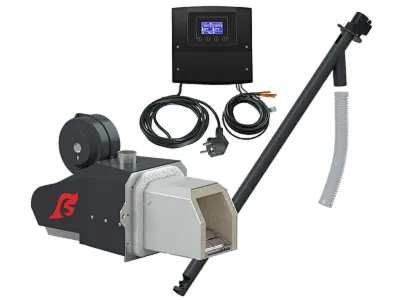
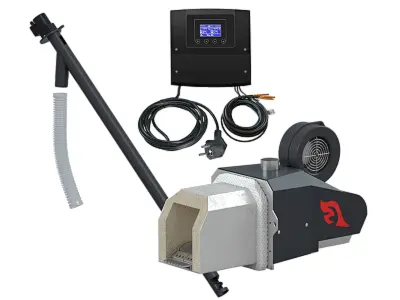
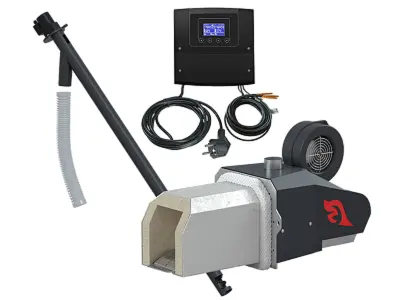
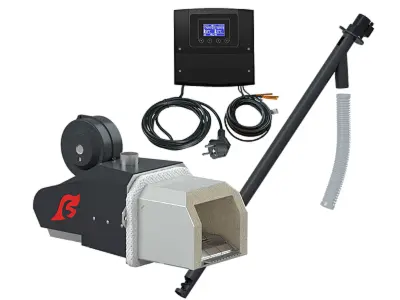
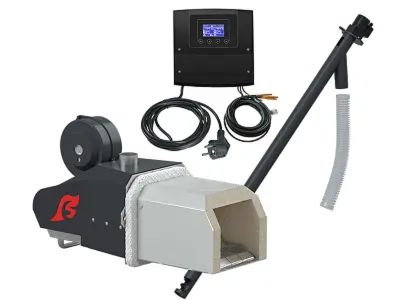
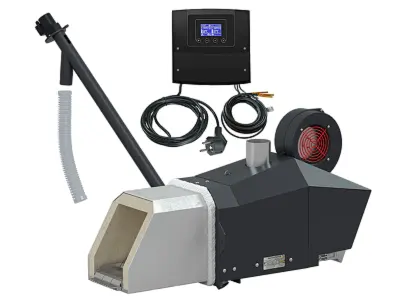
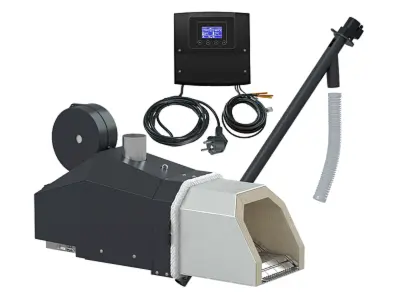
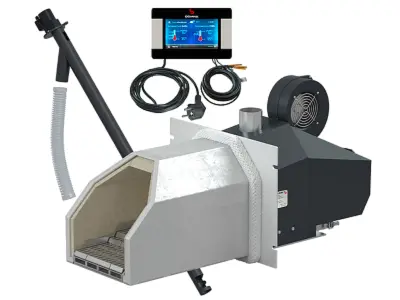
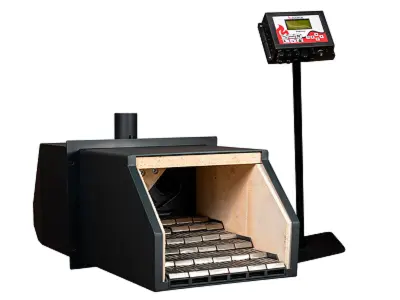
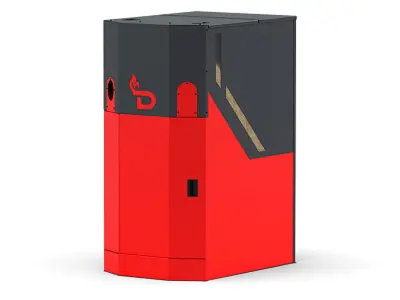
Retrofitting commercial boiler systems and industrial drying units offers a direct route to substantially cutting heating costs and process heat expenditures. Flare-type pellet burners represent an advanced engineering solution designed to automate the operation of solid fuel boilers, heat generators, grain dryers, and industrial kilns. Transitioning from manual stoking of lump wood or coal to fully automated biomass pellet combustion brings operational convenience on par with gas systems, provides precision indoor climate control, and significantly lowers the cost per gigacalorie of thermal energy through sustainable biomass utilization.
Operating Principle, Operational, and Industrial Advantages of Pellet Burners
The technology relies on pressurized flare-type biomass combustion: fuel pellets are systematically metered into the combustion chamber, where forced aeration triggers high-temperature gasification and smokeless post-combustion of volatile gases. This engineered process delivers notable operational benefits:
- High thermal efficiency: combustion efficiency reaches 92–95%, vastly outperforming conventional batch-fed firewood or coal combustion in standard fireboxes;
- Complete autonomy and automation: an intelligent digital controller manages the complete operational cycle — from automatic electric ignition to continuous power modulation and post-purge venting;
- Clean combustion and environmental safety: high combustion temperatures burn the fuel cleanly with near-zero soot and minimal carbon monoxide emissions, drastically reducing boiler heat exchanger cleaning intervals;
- Pellet fuel versatility: modern burners operate reliably on premium wood pellets as well as high-ash agropellets made from sunflower husk, grain screenings, and straw;
- Multi-stage fire protection: built with non-return flaps, backfire heat sensors, and meltable thermofuse drop-tubes to prevent burn-back into the fuel hopper.
Design Features and Engineering Modules of Flare-Type Burners
Long continuous service life under thermal stress is achieved through robust mechanical components and heat-resistant metallurgy:
- Heat-resistant combustion chamber: the burner nozzle is cast or fabricated from high-grade refractory stainless steel that withstands sustained operating temperatures up to 1150 °C without burnout or thermal warping;
- Self-cleaning moving grate mechanism: motorized grate bars periodically cycle to break up slag and automatically discharge ash into the boiler ash pan, preventing nozzle clinkering;
- Automatic ceramic ignition element: a high-efficiency ceramic igniter achieves rapid pellet ignition in minutes with minimal power consumption;
- Variable-speed combustion blower: a modulated draft fan delivers the exact stoichiometric air-to-fuel ratio across all output levels;
- Optical flame sensor: a photocell continuously monitors flame presence inside the chamber, instantly shutting off fuel and draft in the event of flameout;
- External auger feeder: an external screw conveyor smoothly transfers pellets from any bulk storage vessel into the burner feed chute without pellet degradation.
Application Areas and Industrial Integration
Universal mounting flanges make it straightforward to integrate pellet burners into diverse industrial and heating setups:
- Solid fuel boiler retrofits: modernizing hot-water boilers across commercial facilities, livestock housing, greenhouses, and residential complexes;
- Fossil fuel replacement: substituting expensive natural gas or diesel burners on process drying generators, bakery ovens, and melting vats;
- Industrial feedstock drying: delivering clean high-temperature flue gases for rotary and aerodynamic drying systems handling sawdust, straw, or agricultural residues before pelletization;
- On-farm biomass boiler houses: generating low-cost thermal energy from in-house processing byproducts to heat workshops, warehouses, and equipment garages.
Establishing a Closed-Loop Biomass Utilization Cycle
Maximum cost efficiency is achieved by closing the production cycle directly on the farm. Agricultural residues or woodworking waste can be converted into dense, high-BTU solid biofuel on comprehensive pellet production lines or compact pellet mills from the Grand series.
The manufactured pellets can be safely stored dry in high-capacity outdoor galvanized storage bins. To automate fuel delivery, continuous inclined and horizontal screw conveyors feed pellets directly into the burner inlet, enabling autonomous boiler house operation for weeks without manual handling.
Burner Capacity Sizing Guidelines
Selecting the appropriate burner rating depends on heat loss metrics, building dimensions, and process heating requirements:
- Thermal output estimation: for standard insulated commercial and residential buildings, base sizing around 1 kW of thermal output per 10 m² of floor area;
- Boiler firebox dimensions: the firebox depth and volume must allow complete flare development without flame impingement against opposing water walls;
- Fuel specification considerations: burning high-ash sunflower agropellets requires a mechanical moving grate system to clear clinker, whereas clean ENplus-A1 wood pellets can burn efficiently on stationary grates;
- Control automation functionality: support for room thermostats, domestic hot water (DHW) sensors, weather-compensated curves, and remote monitoring via internet or mobile apps.
Installing an automatic flare-type pellet burner converts any standard solid fuel boiler or hot-air generator into an efficient automated thermal plant, stabilizing fuel expenses and ensuring dependable heat output throughout the heating season.