Feed workshop "Farmer"
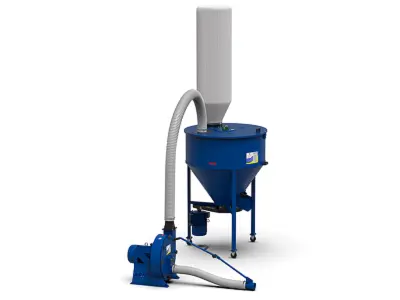
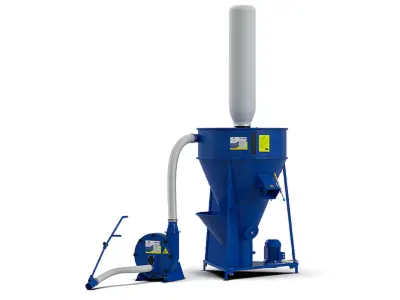
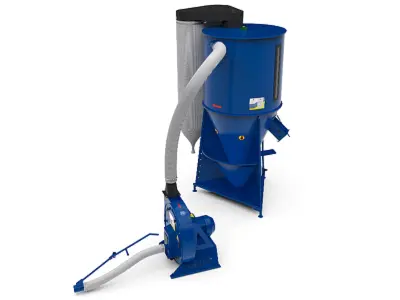
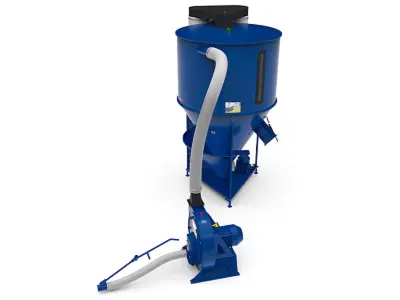
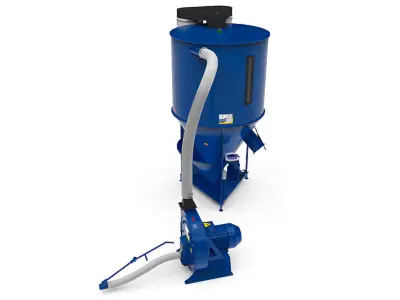
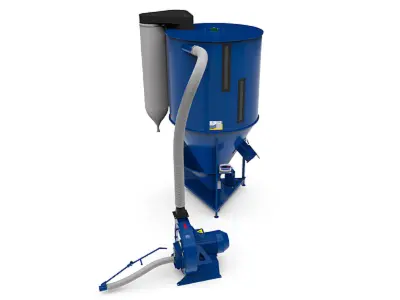
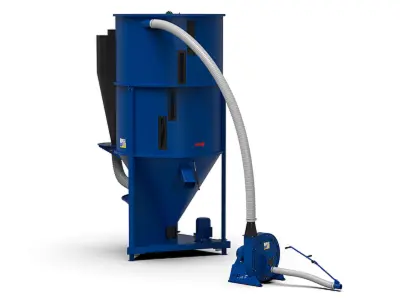
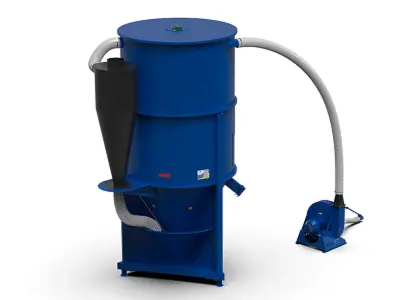
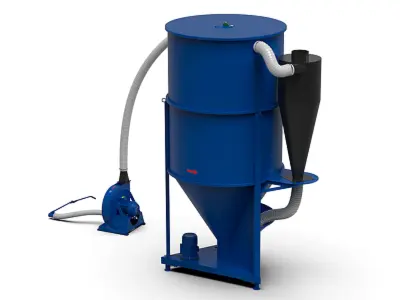
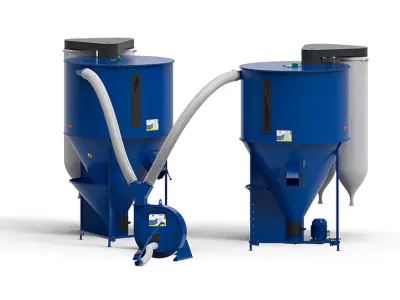
Making your own compound feed is about more than saving money — it is about control: you decide exactly what goes into the ration for pigs, poultry, cattle or rabbits. Fermer feed mills from TechnoMashStroy, a Ukrainian manufacturer, let you turn grain from your own fields into balanced compound feed right on the farm — with no dependence on suppliers and no exposure to price swings on ready-made feed.
What a Fermer feed mill consists of
A feed mill is a ready-made production line in which all operations are carried out in sequence by a single set of equipment. There is no need to move grain by hand between separate machines, and commissioning does not call for complex engineering design.
- Grain crusher (hammer mill) — grinds cereals and legumes to a particle size suitable for feeding;
- Vertical feed mixer — evenly blends the ground grain with premixes, protein and mineral supplements;
- Flexible feed hose — carries the material from the crusher to the mixer by air flow;
- Cyclone and discharge unit — separate dust and make it easy to unload finished feed into bags or transport.
The configuration depends on the model, so check the exact contents of each line on its product page.
Product range: from mini-lines to a double complex
The category includes several sizes and a double line.
- Fermer-300 and Fermer-450 — mini-lines for private household plots and small farms. Compact and quick to pay back;
- Fermer-600, Fermer-1000 and Fermer-1500 — a sound choice for mid-sized farms with a regular need for compound feed;
- Fermer-2000 and Fermer-3000 — for farms with large livestock numbers that need bigger volumes per cycle;
- Fermer-4000 and Fermer-5000 — high-capacity lines for agricultural enterprises and livestock complexes;
- Fermer DUO — a double line.
How to choose a feed mill for your farm
Work out your daily feed demand
Calculate how much feed your livestock consumes per day and per week. The line should cover this demand without running at its limit, but it should not sit half idle either.
Plan for growth
If you intend to expand your herd or flock, choose a model with some reserve. Replacing a line a year later costs more than buying a larger size from the start.
Check your electrical supply
Motor power differs from model to model. Find out in advance whether your power supply can handle it and, if necessary, consider a soft starter.
Why choose TechnoMashStroy feed mills
- A manufacturer, not a middleman. The equipment is made in Ukraine, and the company has been in business since 2011;
- Straightforward design. Simple units are easy to maintain, and spare parts can be ordered directly from the manufacturer;
- A full cycle in one place. The feed mill works alongside related equipment: pellet mills, conveyors and bins for feed storage;
- Manuals and support. Operating manuals are available on the manufacturer's separate website, and our managers will help you choose;
- Delivery and export. Delivery and payment terms are described on the “Delivery and payment” page; for orders outside Ukraine, see “Sales abroad”.
Frequently asked questions
- Which crops can be processed in a feed mill?
As a rule, wheat, barley, maize, oats and other cereals and legumes. Please check the permitted crops for a specific model with a manager. - How does a feed mill differ from a stand-alone feed mixer?
A feed mixer only blends components that are already prepared. In a feed mill, the mixer is combined with a grain crusher and a material feed system, so a single line handles the whole process from whole grain to finished compound feed. If you only need a mixer, see the vertical feed mixers section. - Can a feed mill produce pelleted feed?
A feed mill produces loose (mash) compound feed. For pellets, use pellet mills as the next stage of the line. - Are there alternative series?
Yes. Alongside this series there is the Optima feed mill. And if you only need grinding, take a look at our hammer mills.
Not sure which model suits you? Get in touch: TechnoMashStroy managers will work out the right line for your livestock and help you place an order.